What we buy
If it lifts a load on forks, it is on the list. Counterbalance trucks are the bulk of our volume, telehandlers are among our highest-value purchases, and electric warehouse equipment turns around fastest. Non-runners are bought at component value, not scrap weight.
- Counterbalance — cushion and pneumatic, LP, gas, diesel, electric
- Warehouse — reach trucks, order pickers, stackers, rider jacks
- Outdoor — rough terrain forklifts and telehandlers
- High capacity — 20,000 lb to 40,000 lb mill units
Offers in 24 hours · Paid at pickup · Transport included
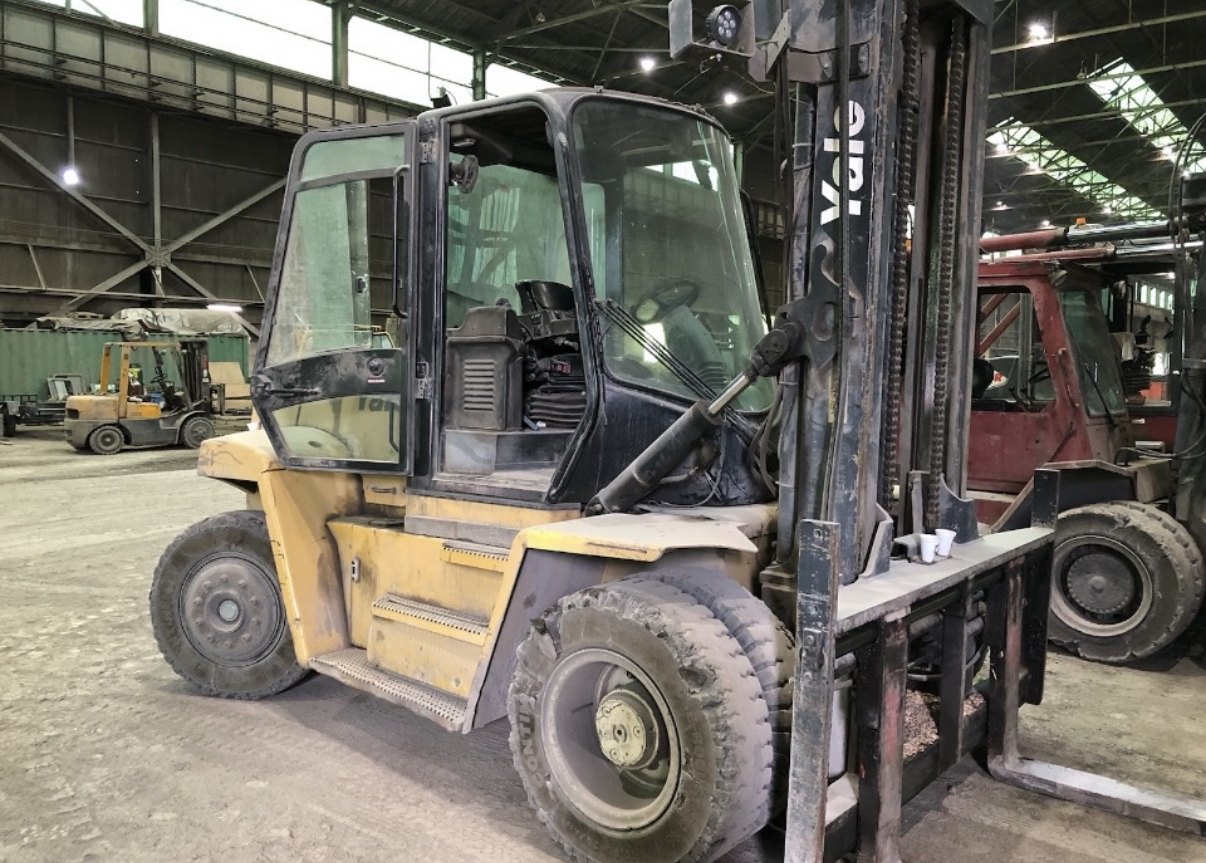
The full buying list
| Category | Class | Power | Where it works |
|---|---|---|---|
| Cushion Tire Forklifts | Class IV | LP, gas or diesel | Smooth concrete, indoor warehouse |
| Pneumatic Tire Forklifts | Class V | LP, gas or diesel | Gravel, asphalt, outdoor yards |
| Electric Forklifts | Class I | 48V / 80V battery | Indoor, food-grade, low emissions |
| Reach Trucks | Class II | 24V / 36V battery | Narrow-aisle racking, 20 ft+ lift |
| Order Pickers | Class II | 24V / 36V battery | Piece-pick distribution, elevated platform |
| Electric Pallet Jacks | Class III | 24V battery | Dock work, trailer loading |
| Rough Terrain Forklifts | Class VII | Diesel | Construction sites, unimproved ground |
| Telehandlers | Class VII | Diesel | Construction, boom reach 30–55 ft |
| High Capacity Forklifts | Class IV / V | Diesel | Mills, ports, steel and paper |
| Non-Running & Scrap Forklifts | Any | Any | Back of the yard, behind the building |
Things owners forget to mention
Attachments carry their own market and they add real money to an offer. Side shifters, fork positioners, rotators, carton clamps, paper roll clamps, drum handlers, man baskets, jibs and boom attachments all sell separately from the truck they arrived on.
So do consumables and spares: extra sets of forks, especially long or thick ones, propane tanks, industrial battery chargers, and spare battery packs. On an electric unit a healthy pack is frequently worth more than the truck carrying it, and a dead pack is the single biggest deduction we make.
Mention shop stock too. Pallets of used parts, a spare mast in the corner, a partial machine kept for spares — we buy those alongside running iron and it saves you paying someone to haul it off.
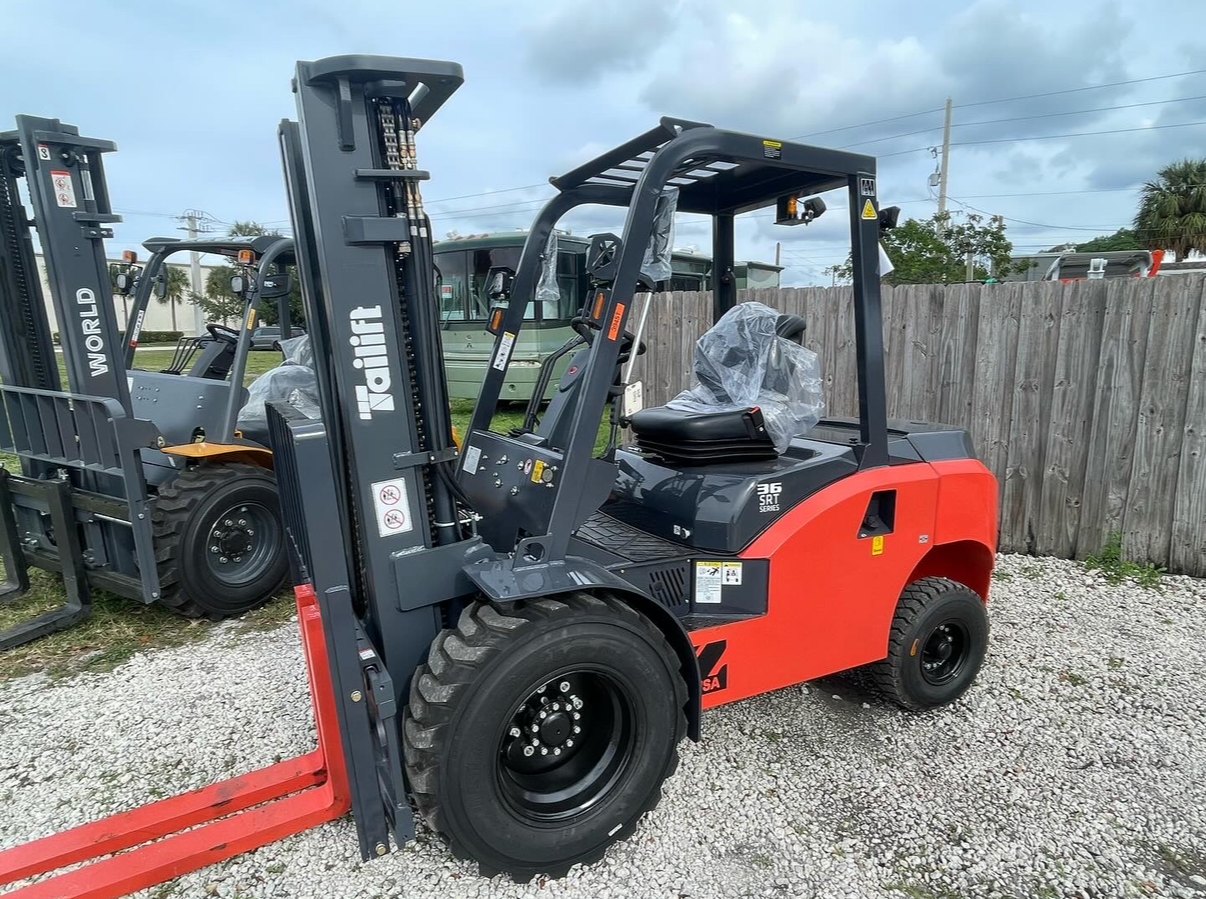
Non-running, damaged and scrap machines
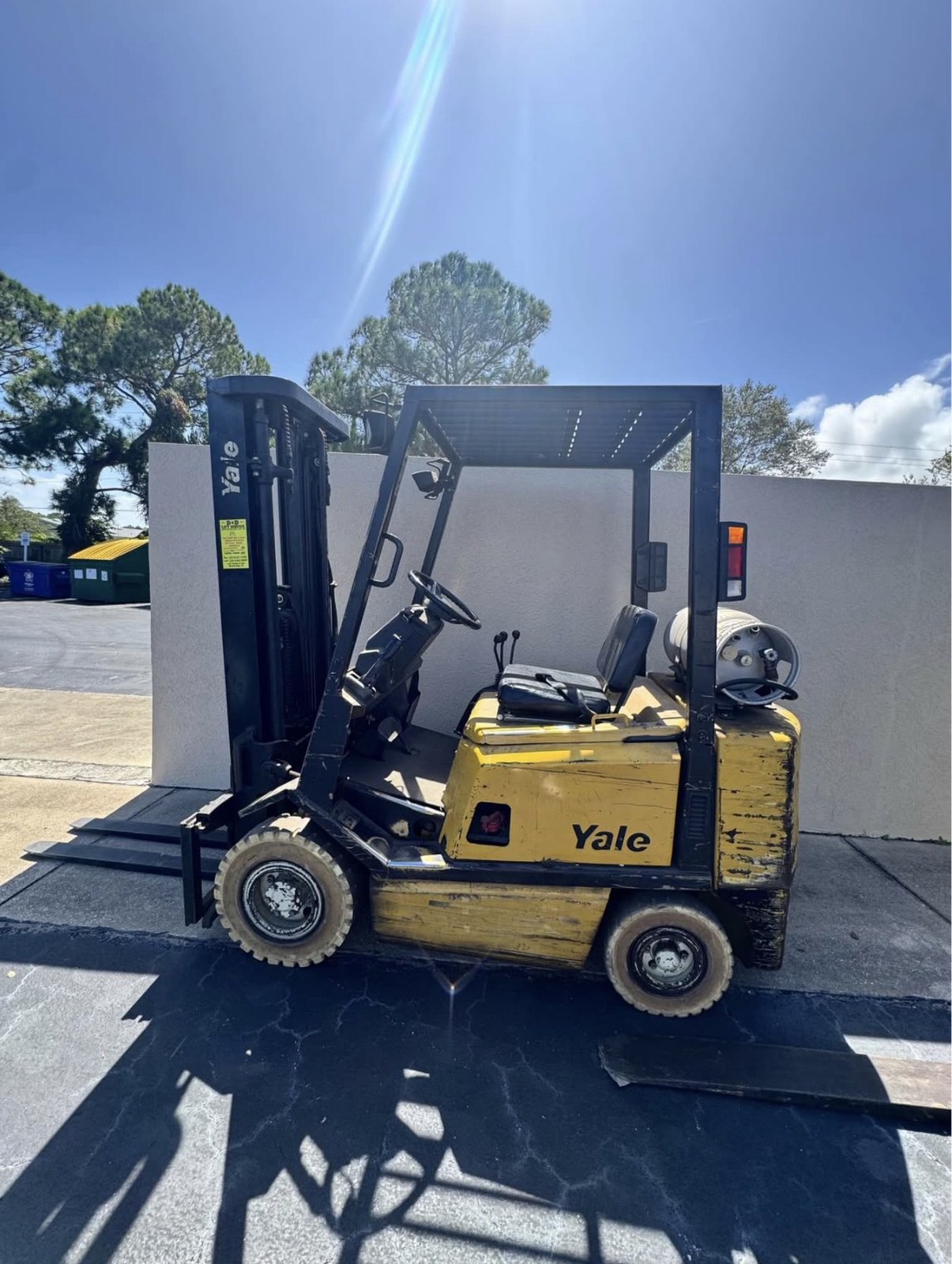
Roughly a third of what we buy will not start. We still want it. A scrapyard weighs the machine and pays by the ton; we look at what still has a working life on it. Masts and carriages get reused constantly, and so do hydraulic pumps, valve banks, drive axles, transmissions, counterweights, wheels and cylinders.
That includes machines most people write off entirely: fire damage, flood damage, tip-overs, seized engines, blown transmissions, cracked frames. Tell us honestly what happened and the offer accounts for it up front. What slows a deal down is a fault discovered at pickup that nobody mentioned on the phone.
What that translates to in dollars
| Capacity | Running offer range | Common application |
|---|---|---|
| 3,000 lb | $1,800 – $6,500 | Light warehouse, retail backroom, single-pallet work |
| 4,000 lb | $2,400 – $8,500 | General warehouse, light manufacturing |
| 5,000 lb | $3,200 – $12,000 | The default American warehouse forklift |
| 6,000 lb | $3,800 – $14,000 | Heavier pallets, lumber, building supply |
| 8,000 lb | $5,000 – $19,000 | Steel, masonry, container unloading |
| 10,000 lb | $6,500 – $24,000 | Heavy manufacturing, pipe, precast |
| 15,000 lb | $9,000 – $34,000 | Mills, marble, heavy fabrication |
| 16,000 lb | $9,500 – $36,000 | Lumber mills, coil handling |
| 20,000 lb | $12,000 – $48,000 | Ports, steel service centers, rail |
| 30,000 lb and up | $18,000 – $95,000 | Container handling, shipyards, heavy industry |
Questions we get asked
Yes, and it is a large share of what we buy. Non-running units still carry value in the mast, carriage, transmission, hydraulic pump, counterweight and frame steel. We bring the equipment needed to load a dead machine at no cost to you. What we need to know is why it stopped — fuel, electrical, engine, transmission or hydraulic — because that changes the number.
A verbal number usually comes in the first phone call. A firm written offer follows within 24 hours of receiving photos, the hour meter reading and the data plate. Pickup is typically scheduled within two to seven business days depending on where in the United States you are and how many units are involved.
At pickup, before the machine is loaded. Cash, certified check or same-day wire — your choice. We do not do consignment, we do not pay after resale, and we do not hold a retainage. If the machine matches what you described, you are paid on site.
Neither. We buy with our own money and take title ourselves. Brokers list your machine and take a percentage when and if it sells. Dealers want a trade-in against a new purchase. We are the end buyer, which is why we can commit to a number the same day.
Three photos and two numbers. Photos: a full side view, the data plate, and the hour meter. Numbers: the hour reading and the capacity from the plate. Tell us any known faults up front — a disclosed problem is priced in, an undisclosed one gets found at pickup and slows everything down.
Both. Single machines are most of our volume. Fleets get handled as one transaction on one check with one pickup window, and larger groups are worth more per unit because our transport cost per machine falls.
Tell us what you have and take a number
Tell us what you have
Fastest route is a phone call — most owners get a number in the first conversation. If you would rather write it out, fill this in and we will reply within 24 hours.
(954) 740-1983