What your used forklift is actually worth
Capacity sets the bracket. Condition places you inside it. Hours, brand, tire type and attachments do the rest. Every figure below is an offer window we pay in cash, not an asking price or a book value.
Offers in 24 hours · Paid at pickup · Transport included
Offer ranges by lift capacity
| Capacity | Running offer range | Common application |
|---|---|---|
| 3,000 lb | $1,800 – $6,500 | Light warehouse, retail backroom, single-pallet work |
| 4,000 lb | $2,400 – $8,500 | General warehouse, light manufacturing |
| 5,000 lb | $3,200 – $12,000 | The default American warehouse forklift |
| 6,000 lb | $3,800 – $14,000 | Heavier pallets, lumber, building supply |
| 8,000 lb | $5,000 – $19,000 | Steel, masonry, container unloading |
| 10,000 lb | $6,500 – $24,000 | Heavy manufacturing, pipe, precast |
| 15,000 lb | $9,000 – $34,000 | Mills, marble, heavy fabrication |
| 16,000 lb | $9,500 – $36,000 | Lumber mills, coil handling |
| 20,000 lb | $12,000 – $48,000 | Ports, steel service centers, rail |
| 30,000 lb and up | $18,000 – $95,000 | Container handling, shipyards, heavy industry |
What condition actually costs you
Cosmetics barely register in this scale. Faded paint, dents, a torn seat and a dead hour meter cost very little. Straight mast steel, an uncracked frame and a powertrain that starts and lifts are what carry the number.
A machine that starts cold and lifts to full height without hesitation sits near the top of its capacity range. One that runs but is due for service — weeping hydraulics, worn tires, tired brakes — sits in the middle, and that is the most common condition we buy. A known fault such as a smoking engine or a mast that will not reach full lift moves it lower, and a machine that will not run at all is priced on its core, mast, transmission and steel. We buy at every one of those points, including fire, flood and rollover damage. Tell us honestly what the machine does and does not do, and the number we quote is the number we pay.
Questions we get asked
Regularly. Dealers sell us trade-ins they do not want to recondition, and rental companies sell us units coming off fleet. We can work on a standing arrangement with monthly pickups if you have consistent volume.
Common on older machines and not a problem. We estimate from tire wear, seat and floorboard wear, pedal rubber, mast chain stretch and general condition. Tell us it is out rather than guessing a number — an inaccurate hour claim discovered at pickup costs more trust than a broken meter ever would.
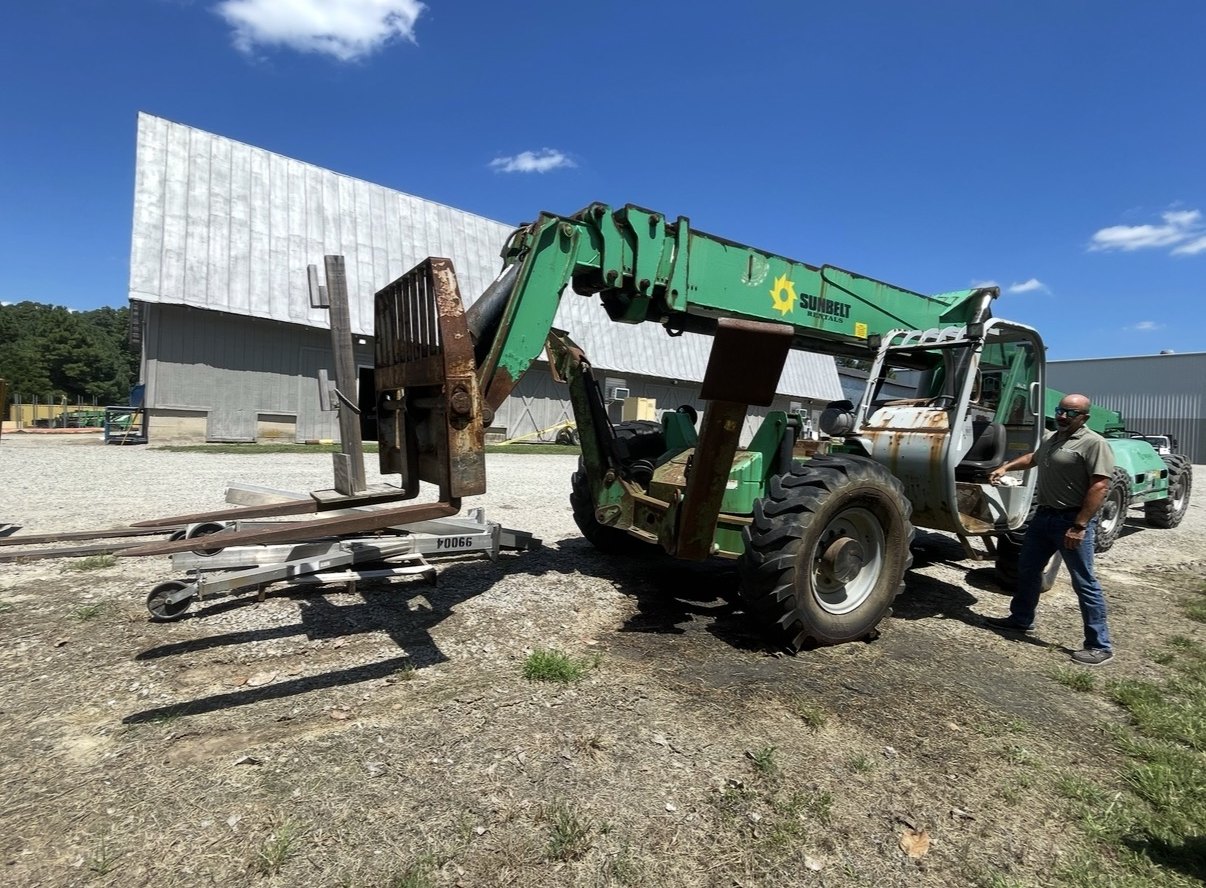
Yes, and they are among our highest-value purchases. Genie GTH, SkyTrak, JLG, CAT TL and Gehl units all sell well. On a telehandler we care about boom wear pads, frame and boom welds, hydraulic leaks and tire condition far more than the hour meter.
Yes. Good 24V, 36V, 48V and 80V industrial packs with usable capacity have real value, as do chargers and quality attachments. Send the pack's date code and voltage and whether it still holds a shift.
Because used forklifts are a national and export market, not a local one. Our buyers are dealers, rebuilders and overseas importers, so we are not limited to what a single the United States operator will pay this month. That is exactly why we can beat local scrap and local trade-in numbers.
In order: a bent or twisted mast, a cracked frame, flood or fire damage, and a blown transmission. Cosmetics barely matter — faded paint, dents and a torn seat cost very little. Straight steel and a running powertrain are what carry the number.
Tell us what you have and take a number
Tell us what you have
Fastest route is a phone call — most owners get a number in the first conversation. If you would rather write it out, fill this in and we will reply within 24 hours.
(954) 740-1983