How selling your forklift actually works
Four steps, no listings, no commission, no waiting for a buyer to appear. Most sellers spend under twenty minutes of their own time on the whole transaction.
Offers in 24 hours · Paid at pickup · Transport included
How the sale works
- 01
You send the basics
Brand, capacity off the data plate, hour meter reading, and whether it runs. Three photos help: full side view, the data plate, and the meter. Call or use the form — either works.
- 02
We price it the same day
Capacity, hours and condition set the range. Brand, tire type, mast height and attachments move it inside that range. You get a firm written number, normally within 24 hours.
- 03
You accept, we schedule
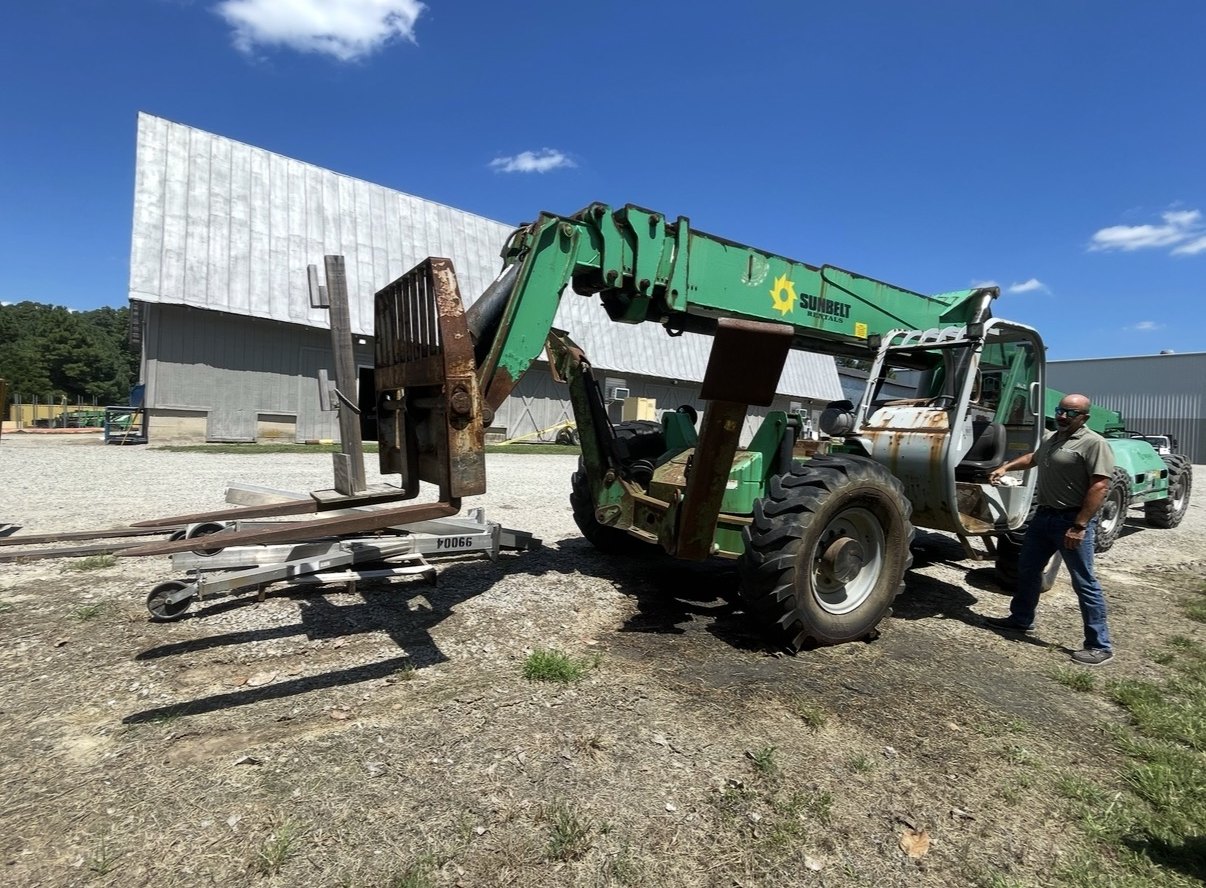
Pickup is typically two to seven business days out. We survey access from your photos first so the right truck and loading gear arrive the first time.
- 04
Paid on site, we haul it
Cash, certified check or same-day wire before the machine is loaded. Bill of sale is prepared by us. Transport is ours — it never comes off your number.
The three facts that decide your number
First, capacity off the data plate — not the rated load someone remembers, the actual figure stamped on the plate. Second, the hour meter reading. Third, whether it starts and lifts to full height. Those three facts put us within a few hundred dollars of a final offer before anyone drives anywhere.
Photos firm it up. A full side view shows mast condition, tire wear and whether the frame is straight. A close shot of the data plate confirms capacity, model and serial. A shot of the hour meter confirms hours. If something is broken, photograph that too — disclosure protects the offer rather than reducing it.
We also ask about site access, because that decides which truck we send: door height, aisle width, whether the machine is behind racking, whether there is a dock face or a ramp, and whether it can roll or has to be dragged onto skates.
How condition maps to money
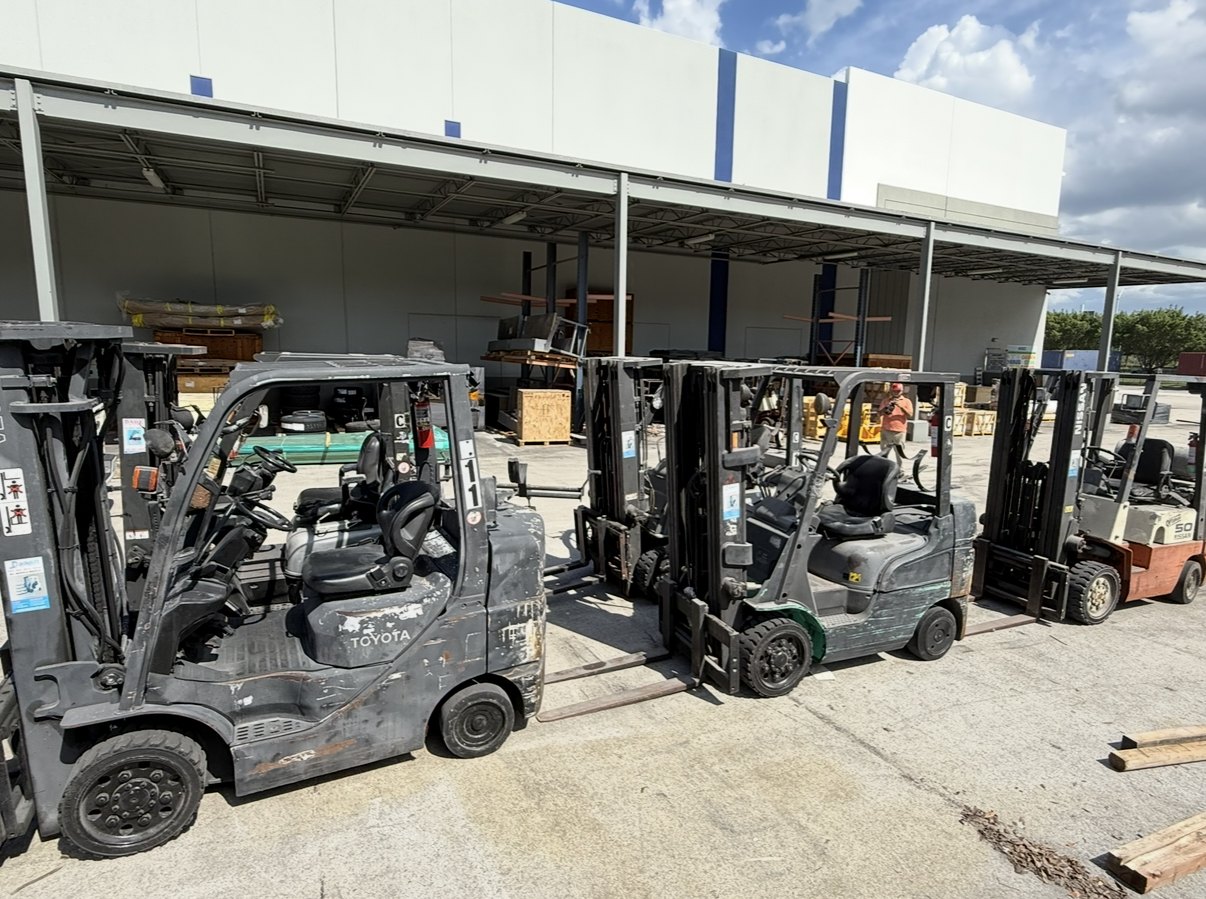
Condition decides where inside a capacity range a machine lands, and it is judged on mechanical function rather than appearance. Cold starting, full-height lifting, straight mast steel, an uncracked frame and a powertrain that holds pressure are what carry value. Faded paint, dents, a torn seat and a dead hour meter cost almost nothing.
Hours move the number as well: under 6,000 hours sits near the top of a range, over 15,000 near the bottom unless the machine has genuinely been maintained and can prove it. Brand matters for the same reason — a Toyota or Hyster core carries a premium over an orphaned make with thin parts support. None of that changes whether we buy. It only changes the figure, and you have the figure before anything moves.
Four reasons owners take our number
We are the end buyer
Not a broker taking a percentage and not a dealer wanting a trade-in. We buy with our own money and take title, which is why we can commit to a number the same day.
Condition is not a disqualifier
Roughly a third of what we buy will not start. A dead engine lowers the number; it does not zero it out. Mast, carriage, hydraulics, drivetrain and frame steel all carry value.
Transport is on us
Quoted numbers already include freight. We bring the gear to load a machine with flat tires, a dead battery, or one parked behind racking.
Payment happens at pickup
Before the forklift leaves your property. No consignment, no waiting on resale, no retainage held back.
Us versus dealer trade, auction and scrap
| Route | Typical timeline | Fees to you | Certainty |
|---|---|---|---|
| Direct sale to us | 3–9 days | None | Fixed number, committed same day |
| Dealer trade-in | Tied to a new purchase | Soft credit, not cash | Only if you are buying |
| Auction | 30–60 days to settlement | Seller commission, lot and transport fees | No floor under the hammer |
| Scrapyard | Days | You usually haul it | Paid by weight, ignores components |
Questions we get asked
Both. Single machines are most of our volume. Fleets get handled as one transaction on one check with one pickup window, and larger groups are worth more per unit because our transport cost per machine falls.
All of them. Toyota, Hyster, Yale, Crown, Raymond, Caterpillar, Clark, Komatsu, Nissan and UniCarriers, Mitsubishi, Linde, Jungheinrich, Doosan, Hyundai, Taylor, Big Joe, Genie and SkyTrak. Brand affects the number but never whether we will buy it — obscure and orphaned brands still have core and steel value.
None. No inspection fee, no appraisal fee, no transport charge, no paperwork fee. If you accept our offer you are paid the full amount. If you decline, you owe nothing and we do not call you repeatedly.
Almost never. Repairs rarely return their cost at wholesale — a $2,800 transmission job might add $1,500 to the offer. Two exceptions are worth it: charge or replace a dead battery on an electric unit, and air up flat tires so the machine can be moved. Otherwise sell it as it sits and let us price the fault.
Include everything if you can. Tanks, spare forks, side shifters, fork positioners, clamps, rotators and man baskets all add to the offer. If you want to keep an attachment, say so before we quote so the number reflects the machine without it.
Yes — electric counterbalance trucks, reach trucks, order pickers, walkie stackers and rider pallet jacks. Battery condition drives the number heavily. A healthy pack with a matching charger can be worth more than the truck it sits in, so never scrap an electric unit without calling first.
Yes. Low doors, tight aisles, machines wedged behind racking and units on a second floor with a freight elevator are routine for us. We survey access from your photos before we send a truck so the right equipment shows up the first time.
Tell us what you have and take a number
Tell us what you have
Fastest route is a phone call — most owners get a number in the first conversation. If you would rather write it out, fill this in and we will reply within 24 hours.
(954) 740-1983